
The First Step to a Successful Partner Visa
When you’re applying for a Partner Visa, everything feels high-stakes. And it is.
It’s not just paperwork. It’s your future together. It’s where you’ll live, work, build a life, maybe start a family.
But despite how important the Partner Visa process is, couples are often not sure where to begin. They jump straight into forums, online groups, or threads and comment sections — hoping to piece together a strategy based on advice from well meaning (but unqualified) strangers on the internet.
At Port Migration, we’ve spent the past 10 years helping couples navigate the visa process with confidence. And in our experience, there are three things that make or break your application.
We call them The Three Es of Partner Visa Success.
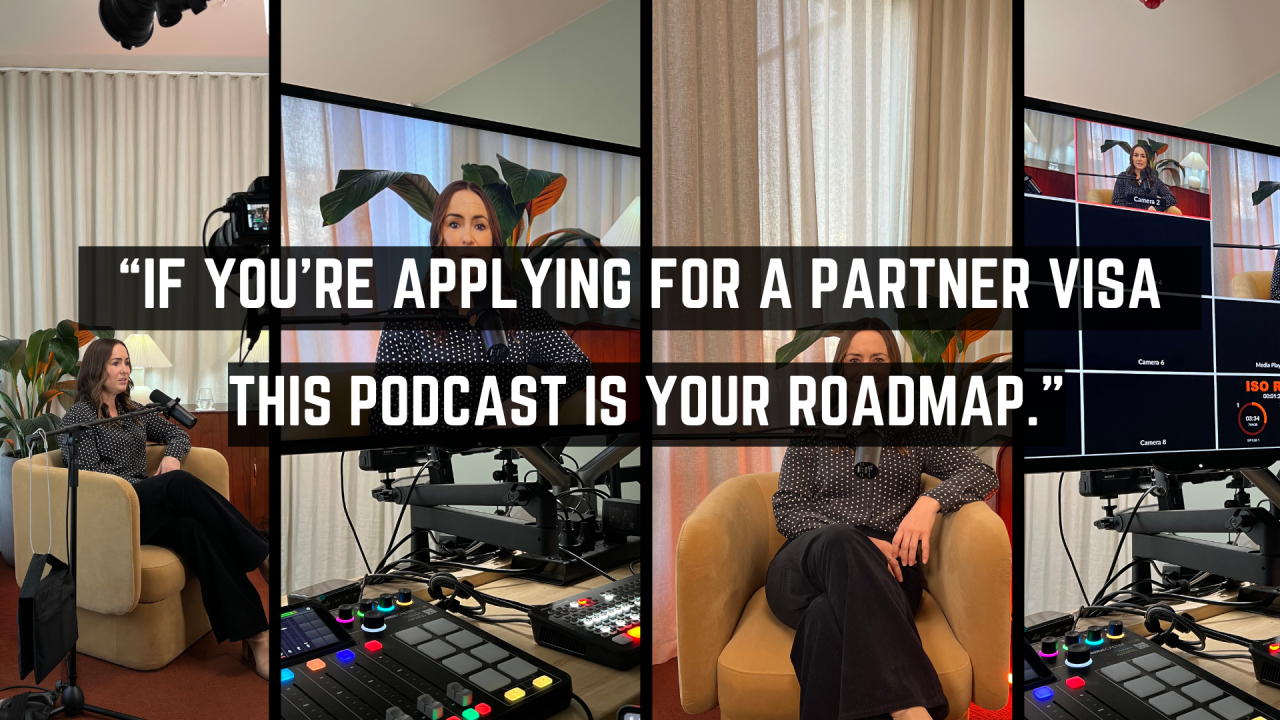
We talk about them in detail in Episode 1 of the Port Migration Partner Visa Podcast.
If you and your partner are trying to understand the Partner Visa Process, this is where you need to start.
What Is a Partner Visa?
Let’s keep it simple. There are three main types of Australian Partner Visas:
🔹 Onshore Partner Visa (Subclass 820/801)
For couples applying when the applicant is in Australia. You apply while you’re here and can stay while it’s being processed.
🔹 Offshore Partner Visa (Subclass 309/100)
For couples applying when the applicant is outside Australia. The applicant must be offshore when applying but can be in or outside of Australia when the visa is granted.
🔹 Prospective Marriage Visa (Subclass 300)
For engaged couples who plan to marry in Australia. The visa allows the applicant to travel to Australia to get married within a set timeframe. Once married, the applicant can apply for an onshore Partner Visa.
Each of these visa types follows a two-step Partner Visa process: temporary visa first, then permanent residency. The Prospective marriage visa has a third step before the Partner Visa application.
The Three Es of Partner Visa Success
At Port Migration, we use a simple but powerful framework to help couples navigate the process successfully.
Most strong Partner Visa applications follow the same foundation.
Here’s what we mean:
1. Eligibility
Are you even allowed to apply?
It sounds obvious, but many people skip this step entirely.
Before you apply for a Partner Visa or even start collecting evidence, you need to confirm that you meet the basic visa eligibility criteria.
Eligibility is everything.
This includes:
- Your relationship status (de facto, married, or engaged)
- Visa history and current visa status
- Health and character checks
Too many couples find out too late that they were never eligible in the first place — and it’s heartbreaking.
If you have questions about eligibility, a Free Call with a MARA Registered Migration Agent is a great place to start.
2. Evidence
When you’re applying for a Partner Visa, it’s not enough to be in a relationship.
You need to prove it.
Your Partner Visa application must include a wide range of evidence that shows your relationship is genuine and ongoing.
Evidence is essential.
This can include:
- Financial Evidence (shared bank accounts, bills, leases)
- Social proof (photos, travel records, declarations from friends and family)
- Nature of your household (how you manage your household together)
- Nature of your relationship
Submitting too little evidence — or the wrong kind — is one of the most common reasons for Partner Visa delays and refusals.
Download our Free Ultimate Guide to Partner Visas for more information about Partner Visa Evidence. It’s designed to supercharge your research process and get you started on the right track.
3. Errors
Errors are the silent killers of Partner Visa applications.
Even genuine couples get refused because of errors. Things like:
➡️ Inconsistent answers
➡️ Missing documents
➡️ Not checking emails or responding to requests.
The good news is that many errors are completely avoidable — if you know what to look for.
Applying for a Partner Visa is about so much more than just filling out a form. It’s about getting your application right the first time.
Why This Matters
Too often, we meet couples who started out confident and hopeful — and are now feeling overwhelmed, burnt out, or unsure of what to do next.
That’s why we created the Port Migration Partner Visa Podcast.
To help you move forward with clarity and confidence.
In Episode 1, we walk through the Three Es, break down each visa type, and help you understand how to get started the right way.
Find the links to listen on all the major Podcast platforms at our Podcast Hub.
Final Thoughts
If you’re feeling lost in the Partner Visa process, know this:
You’re not alone — and you don’t need to figure this out by yourself.
We’ve helped hundreds of couples prepare strong, clear, well-supported applications.
And we’d love to help you too.
Book a free consultation with our MARA Registered Migration Agents
Download our free Ultimate Guide to Partner Visas
Join our Partner Visa Basics Webinar
Start from Episode 1 of the Port Migration Podcast
No stress.
No guesswork.
Just expert help — so you and your partner can start your next chapter together.
This article is based on Season 1 Episode 1 of the Port Migration Partner Visa Podcast.
MARN 1575613
#PartnerVisa #SpouseVisaAustralia #PartnerVisaProcess #AustralianImmigration #MigrationAgentAustralia #VisaHelp #OnshoreVisa #OffshoreVisa #MARAagent #RelationshipVisaAustralia
Disclaimer: The information is for general guidance on matters of interest only. They are not intended to be comprehensive, and they do not constitute and must not be relied on as legal or immigration advice. The application and impact of Australian immigration laws can vary widely based on the specific facts involved. You must seek specific immigration advice tailored to your circumstances from a MARA Registered Migration Agent or Migration lawyer.
